Are 20–30 Million Reads Enough for RNA-Seq?
When looking into sequencing depth for RNA-Seq, approximately 20–30 million reads per sample are sometimes presented as a general guideline. However, the read numbers shown on sequencing service providers’ websites may refer not to read pairs, but to the total number of reads obtained by adding Read 1 and Read 2. In that case, the number of read pairs is only half of the stated number.
In actual experiments with approximately 20–30 million read pairs, genes with high to moderate expression often produce relatively stable gene counts. However, low-expression genes may have only a few to a few dozen counts and may not be detected in some samples. This point is also discussed in an article examining the value of 3′ RNA-Seq.
As the Number of Samples Increases, Fewer Genes Remain Suitable for Analysis
In actual RNA-Seq experiments, total read counts and usable read counts can differ several-fold among samples. As the number of samples increases, the likelihood of including samples with particularly low numbers of usable reads also increases.
The problem is that, when multiple samples are compared, the low-expression range that can be measured reliably across all samples is limited by the sample with the narrowest dynamic range . Therefore, the effective sequencing depth available consistently across all samples may be lower than would be expected from the average read count reported for the sequencing run.
This issue is discussed in more detail in a case study comparing 40 biopsy-derived samples.
Current Bulk RNA-Seq Does Not Reach Far Enough into the Low-Expression Range
What is mainly measured by commonly used bulk RNA-Seq is the expression of genes in the high-to-moderate range. It is important to recognize that the low-expression range is not measured sufficiently . To expand the measurable range toward lower expression levels, it is necessary to consider increasing the number of reads.
In the article examining the value of 3′ RNA-Seq, we proposed that omitting Read 2 and concentrating reads near the 3′ ends of transcripts may increase the number of reads that can be used for gene counts within the same budget. However, that discussion focused mainly on the costs of library preparation and sequencing.
In practice, increasing the number of reads also increases the costs associated with storing FASTQ files, transferring data, the computational time required for mapping and quantification, storing intermediate files and analysis results, and maintaining backups. Even if sequencing becomes less expensive, increasing read numbers several-fold or even tens of times by brute force also causes the total volume of data handled by the research project to grow dramatically. There is therefore a practical limit to simply continuing to increase the total number of reads.
Depleting Highly Abundant RNAs and Redirecting Reads toward the Low-Expression Range
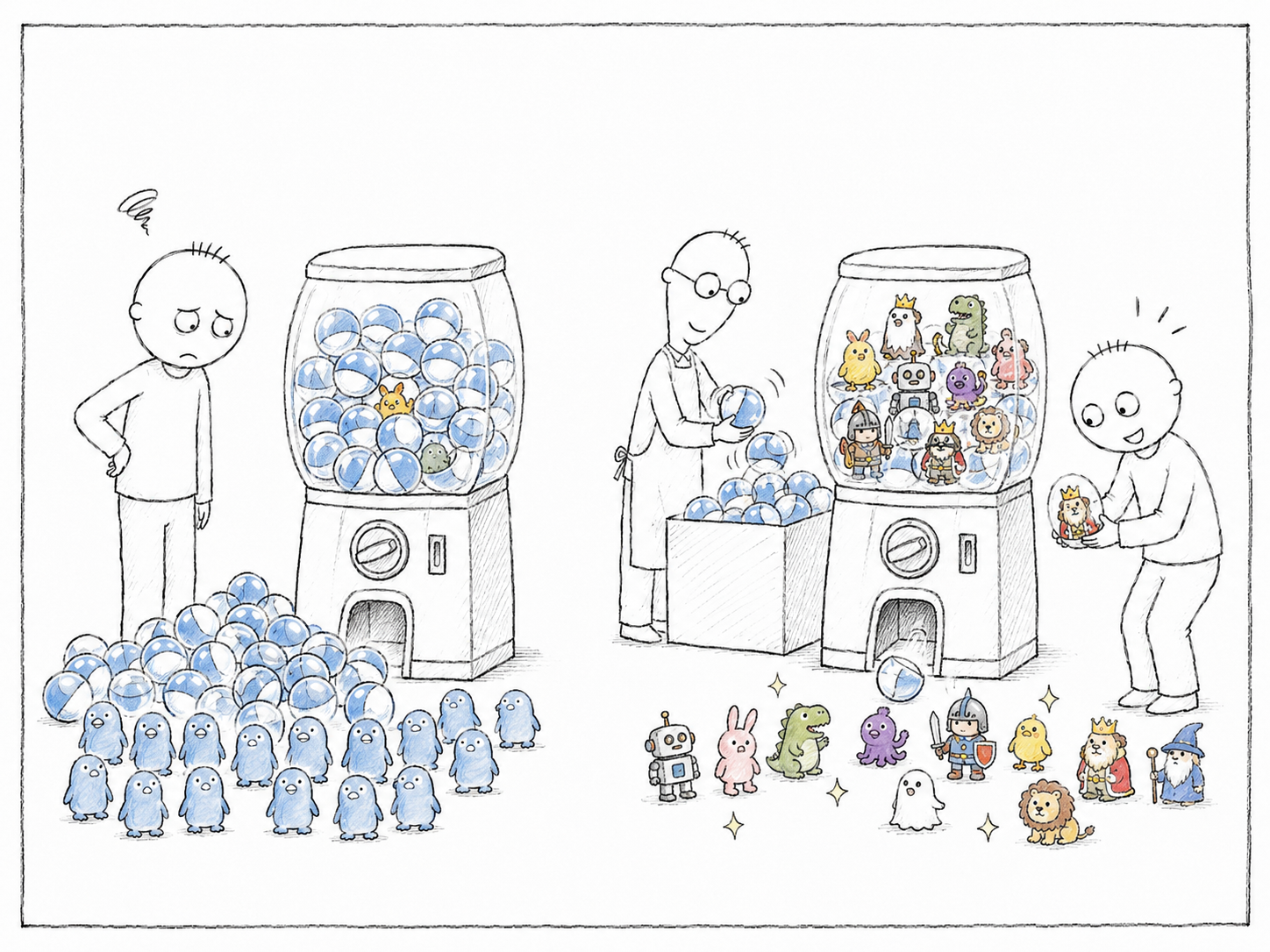
In conventional RNA-Seq, large numbers of reads are consumed by highly abundant RNAs that are present at high levels in the RNA sample. No matter how much the total number of reads is increased, highly abundant RNAs continue to consume a large proportion of those reads, so the amount of genuinely new information remains limited.
One possible approach is to selectively deplete highly abundant RNAs at the RNA sample stage and redirect the limited sequencing reads toward genes with moderate to low expression . If highly abundant RNAs are reduced before library preparation, the proportion of library fragments derived from those RNAs can be decreased, while the relative proportion of library fragments derived from low-abundance RNAs may be increased.
Pooling All Experimental Groups to Identify Highly Abundant RNAs for Depletion
One possible way to select depletion targets is to take equal amounts of RNA from all experimental groups and prepare a single pooled sample. RNA-Seq can then be performed on this pooled sample at a commonly used sequencing depth to identify highly abundant RNAs that account for a large proportion of the reads across the experiment as a whole.
RNAs that are highly expressed across all experimental groups will remain abundant after pooling and are therefore more likely to be selected as depletion targets. In contrast, an RNA that is highly expressed in only one experimental group will become less abundant relative to the total RNA after pooling and may therefore be less likely to be selected for depletion.
However, the purpose of this approach is not to exclude biologically important highly expressed genes from the analysis. Samples before depletion are measured separately, so the expression levels and between-group differences of genes selected for depletion can still be examined in the undepleted data.
Depletion targets can therefore be selected primarily by identifying RNAs that consume a large proportion of reads in the pooled sample and reduce the number of reads available for low-abundance RNAs.
Sequencing Samples after Depletion of Highly Abundant RNAs
- Perform RNA-Seq at approximately 20–30 million read pairs on a pooled sample prepared by mixing equal amounts of RNA from all experimental groups, and identify highly abundant RNAs that consume a large proportion of the reads across the experiment.
- Design probes that bind to those RNAs and selectively deplete the highly abundant RNAs from each individual RNA sample.
- Sequence each depleted sample at approximately 20–30 million read pairs, or at a greater depth when the goal is to extend the measurable range further toward lower expression levels.
If the proportion of library fragments derived from highly abundant RNAs can be reduced, more reads may be redirected toward moderately and weakly expressed RNAs that could not previously be measured sufficiently, even without increasing the total number of reads. If sequencing depth is increased further, the measurable range may be extended toward lower expression levels more efficiently than by simply increasing read depth in conventional RNA-Seq without depletion.
Highly Abundant Sequences Can Also Be Reduced after Library Preparation
The influence of highly abundant RNAs can be reduced not only by depleting them at the RNA sample stage, but also by selectively reducing highly abundant sequences after the RNA-Seq library has been prepared.
For example, DASH (Depletion of Abundant Sequences by Hybridization) uses guide RNAs and CRISPR-Cas9 to selectively cleave specific sequences in a DNA library. Because cleaved library fragments are less likely to be used in subsequent amplification or cluster formation, the proportion of reads occupied by highly abundant sequences can be reduced.
However, because DASH is performed after library preparation, it cannot recover low-abundance RNAs that were not incorporated into the library. It should instead be understood as a method for allocating more reads to low-abundance sequences that are already present in the library.
The following discussion focuses not on DASH, but on an approach in which highly abundant RNAs are depleted at the RNA sample stage before library preparation.
Using Measurements before and after Depletion as Complementary Data
If only the depleted sample is analyzed, the original expression levels of the depleted genes cannot be determined. The same RNA sample could therefore be divided and analyzed in two ways:
- RNA-Seq without depletion, used to measure the high-to-moderate expression range
- RNA-Seq after selective depletion of highly abundant RNAs, used to measure the moderate-to-low expression range
However, depleting highly abundant RNAs changes the composition of the RNAs represented in the library. Counts obtained before and after depletion therefore cannot be directly compared in the same way as ordinary gene counts, nor can they simply be combined into a single continuous expression table.
Instead of being connected numerically, the two datasets should be interpreted as complementary datasets that measure different expression ranges .
If the datasets obtained before and after depletion cannot be directly compared or combined, Agilent microarrays could also be considered for measuring the high-to-moderate expression range before depletion, instead of using RNA-Seq. In addition to measuring moderately to highly expressed genes relatively stably, microarray data are easy to handle and require very little storage space.
Depleting Highly Abundant RNAs Does Not Necessarily Increase Information in Direct Proportion
Suppose reads derived from highly abundant RNAs account for half of all sequencing reads. If those RNAs could be depleted sufficiently, the relative proportion of library fragments derived from the remaining RNAs would theoretically increase by approximately twofold. If the same total number of reads were then sequenced, the number of reads allocated to genes with moderate to low expression would also be expected to increase.
However, the actual amount of new information may not increase twofold. If large amounts of highly abundant RNA are removed from a limited quantity of RNA sample, too few independent RNA molecules may remain for library preparation. In that case, the same RNA fragments may be amplified and sequenced repeatedly, or adapter-adapter products that contain no RNA insert may be sequenced, reducing the amount of genuinely new gene information obtained.
It is therefore necessary to determine experimentally which RNAs should be depleted, and to what extent, in order to maximize the number of usable reads derived from low-expression RNAs. It is also important to recognize that differences in depletion efficiency among samples could introduce a new source of technical variation.
Given these costs and technical difficulties, it is understandable that custom depletion of highly abundant mRNAs has not become as widely used as a general-purpose method such as rRNA depletion.
Even so, considering the current technological environment, there may now be reason to reconsider this approach. One reason is that the technical limitations of scRNA-Seq have become clearer alongside its advantages. Another is that the costs of data storage, transfer, and processing associated with increasing read numbers can no longer be ignored.
Can scRNA-Seq Measure Low-Expression Genes?
scRNA-Seq is useful because it can distinguish among cell types and cellular states. However, in currently common droplet-based scRNA-Seq, the number of RNA molecules recovered per cell and the total number of UMIs are limited. Even when several hundred to several thousand genes are detected from one cell, many genes have only one to a few counts. In practice, counts are heavily concentrated in the top few to several dozen extremely highly expressed genes, making it difficult to compare many other genes as stable cell-level expression measurements. Genes with still lower expression have a count of zero in many cells, and even when detected, may receive only a few counts in a subset of cells. Separating cells one by one therefore does not automatically make it possible to measure low-expression genes in greater detail.
Although it does not directly examine scRNA-Seq, a case study comparing low-input RNA-Seq data shows that as RNA input decreases, measurements can become unstable even for genes that receive relatively high counts.
The widespread use of scRNA-Seq has created the impression that the entire transcriptome of each individual cell can now be measured in detail. At the same time, however, the practical limitation imposed by the small amount measured per cell has also become clearer.
By contrast, bulk RNA-Seq measures RNA collected from large numbers of cells. As a result, an RNA molecule that exists at only a very low level in each cell may still reach a measurable quantity when collected from many cells. In conventional bulk RNA-Seq, low-abundance RNAs may not receive enough reads and can be obscured by highly abundant RNAs. However, if highly abundant RNAs can be selectively depleted at the RNA sample stage, more reads may be allocated to genes that could not be measured sufficiently by either conventional bulk RNA-Seq or scRNA-Seq.
Of course, bulk RNA-Seq cannot directly identify which cell types contributed to the observed expression of a gene. Even so, bulk RNA-Seq after depletion of highly abundant RNAs has the potential to aggregate low-abundance RNAs from large numbers of cells and measure them more deeply .
Detection Frequency Can Also Be Informative in the Low-Expression Range
Extremely low-expression genes may not be detected consistently in every sample, even after highly abundant RNAs have been depleted. However, with a sufficient number of biological replicates, it is possible to compare how many samples in each experimental group detect a given gene. For example, if a gene is rarely detected in the control group but is repeatedly detected in many samples in the treatment group, the difference in detection frequency may provide biological information, even when the counts are low.
In the low-expression range, the mean count is not the only possible measure. The frequency with which a gene is detected under each condition may also become a target of analysis.
Considering a Different Direction for the Future of Bulk RNA-Seq
The fact that depletion of highly abundant RNAs has not become widely used does not mean that the principle has no value. Because depletion targets differ among samples and experimental conditions, custom probe production and validation are required, making the method difficult to develop as a broadly applicable technology. The fact that scRNA-Seq made cell-by-cell expression measurement appear more attractive may also have influenced research and development priorities.
However, now that not only the advantages of scRNA-Seq but also the limits of its measurement range have become clearer, it may be worth examining more concretely another way to extend the sensitivity of bulk RNA-Seq.
scRNA-Seq and bulk RNA-Seq after depletion of highly abundant RNAs take different approaches toward their goals. Given that both have technical limitations, it is reasonable to regard them as complementary technologies.